
The 98th Academy Awards were meant to celebrate a historic milestone for global music. Instead, the moment quickly turned into a controversy that sparked intense debate online. The animated film KPop Demon Hunters made history when its song “Golden” won the Oscar for Best Original Song, becoming the first K-pop track ever to receive the prestigious award.
For many fans and industry observers, the win symbolized how far Korean pop culture has come on the global stage. The song, performed by EJAE, Audrey Nuna, and Rei Ami, had already enjoyed massive success, topping charts worldwide and collecting several major accolades before reaching the Oscars.

However, what should have been a purely celebratory moment took an awkward turn during the acceptance speech. As members of the songwriting team began thanking collaborators and supporters, the orchestra suddenly started playing the “wrap-up” music, effectively cutting off co-writer Yu-Han Lee mid-speech. The broadcast quickly moved on, leaving the team visibly surprised on stage.
The abrupt interruption immediately triggered backlash across social media. Fans accused the ceremony of being disrespectful and insensitive, arguing that such a historic achievement deserved more recognition and airtime. Some viewers even labeled the incident discriminatory, pointing out that the moment represented a significant breakthrough for Asian representation in Hollywood.
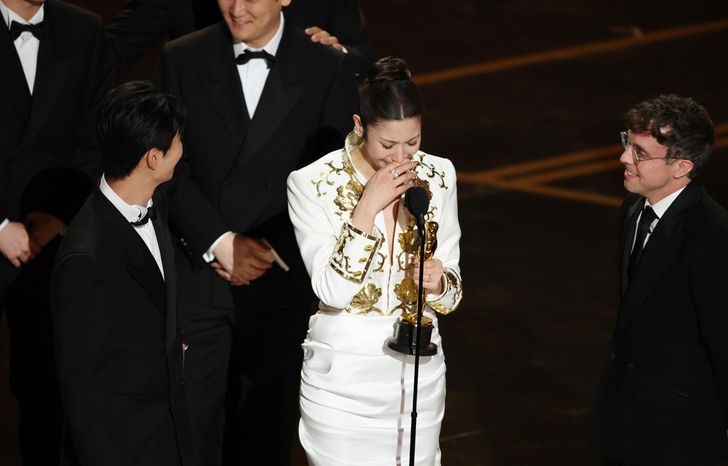
Audience members inside the venue reportedly reacted with boos as the music drowned out the speech. Later, the creative team finished their remarks backstage, thanking collaborators and highlighting the global influence of K-pop and the collaborative spirit behind the film’s music.
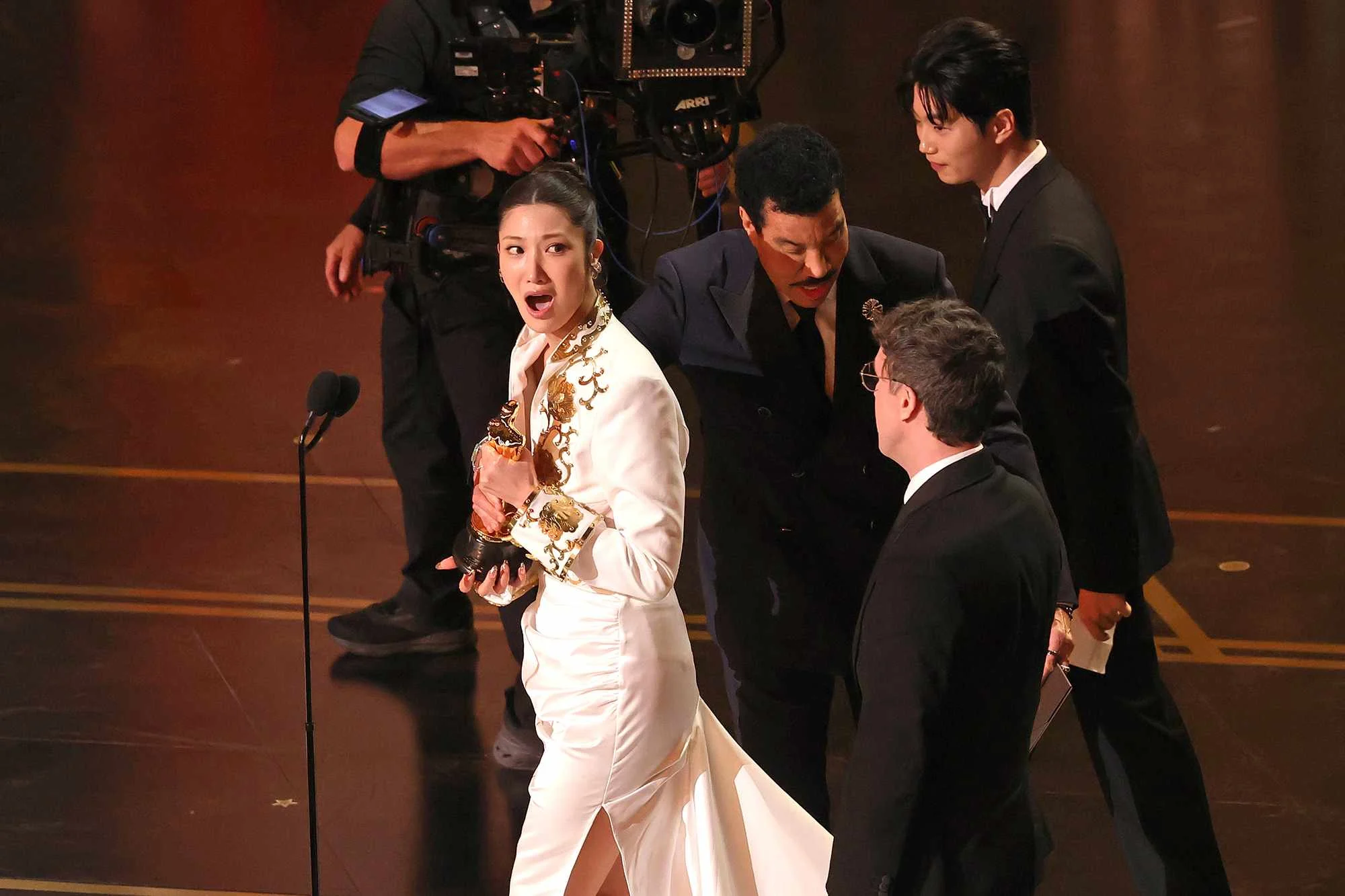
Despite the controversy, the success of KPop Demon Hunters remains undeniable. The film itself also won Best Animated Feature, cementing its place as one of the most influential animated releases of the year.
While the Oscars incident sparked debate, it also reinforced one clear message: K-pop’s cultural impact is now impossible for the global entertainment industry to ignore.