
Korean readers can now pick up one of Indonesia's most talked-about novels in their own language.
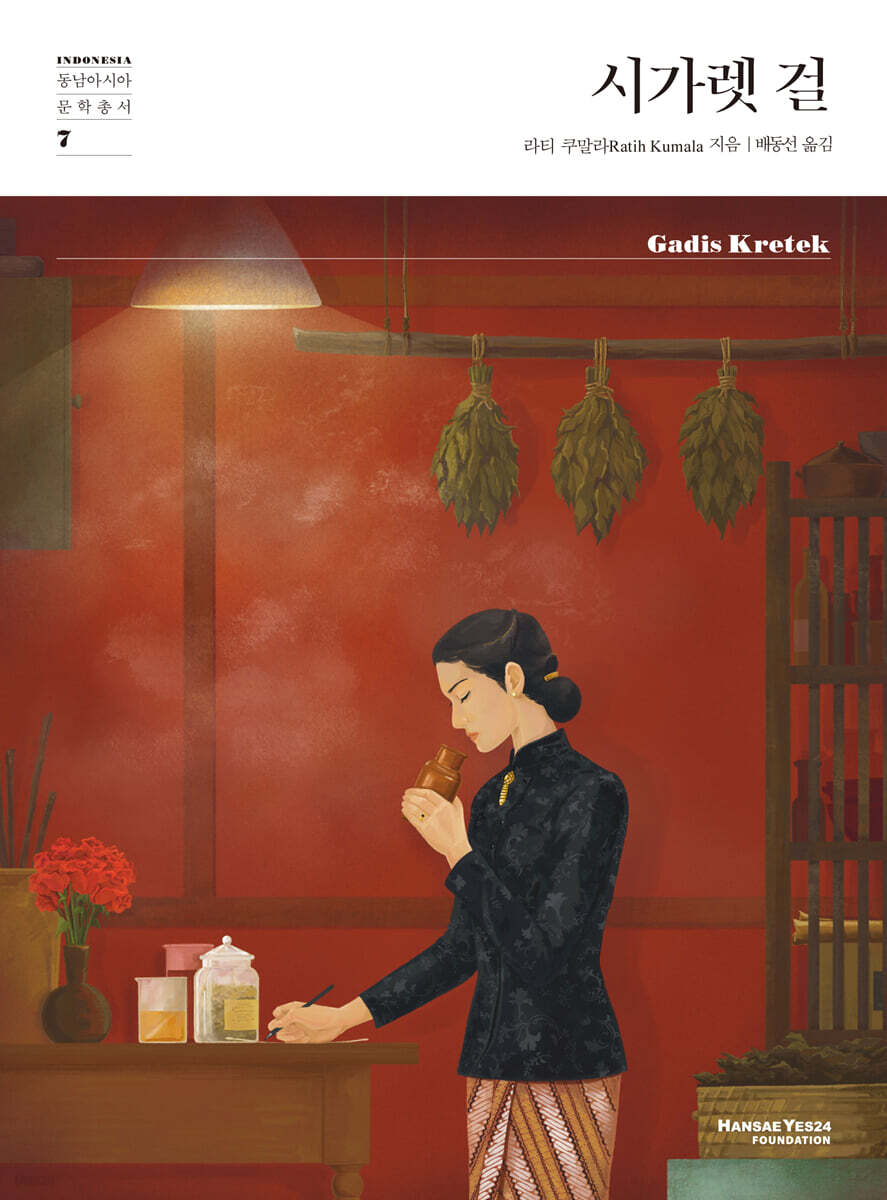
"Cigarette Girl," written by Indonesian author Ratih Kumala, has been published in Korean as the seventh volume in the Hansae Yes24 Foundation's Southeast Asian Literature Series. The novel, originally titled "Gadis Kretek," was adapted into a Netflix original series in 2023 that reached the global Top 10 and introduced Indonesian storytelling to audiences far beyond the region. The Korean print edition and ebook will both be released officially on March 23, with a serialized version already available on Yes24's ebook subscription service Crema Club from March 9.
The novel is set against 1960s Indonesia and follows three generations of two Javanese families, centred on the story of Jeng Yah, a woman who carved out an independent life inside the male-dominated clove cigarette industry. The kretek industry, a deeply specific piece of Indonesian cultural history, gives the book its texture and atmosphere, and Kumala uses it to tell a broader story about love, family, secrets, and social change across decades.
Kumala attended a press conference in Seoul on Friday, where she called the Korean publication a personal milestone. She noted that not many Indonesian literary works make it into Korean translation, and pointed out that her husband's novel "Man Tiger" had been published in Korean a few years earlier. "So this is also a kind of achievement for our family," she said.
Indonesian Ambassador to Korea Cecep Herawan, who attended the event, described literature as a window into a nation's soul. He said the longstanding economic and diplomatic ties between Korea and Indonesia would now move to a deeper level of connection through stories.
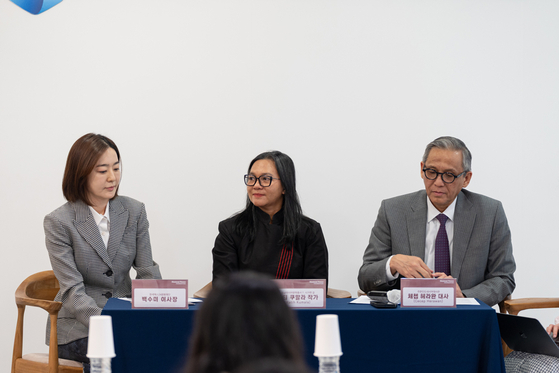
The Hansae Yes24 Foundation launched its Southeast Asian Literature Series in 2022 with works from Vietnam, Indonesia, and Thailand, and has since added titles from Philippine writers Nick Joaquin and Mica De Leon. Baek Soo-mi, chairperson of the foundation, said the program exists to bring works that Korean publishers might otherwise overlook into the hands of Korean readers. Her goal is for these books to eventually be recognised as classics of world literature.
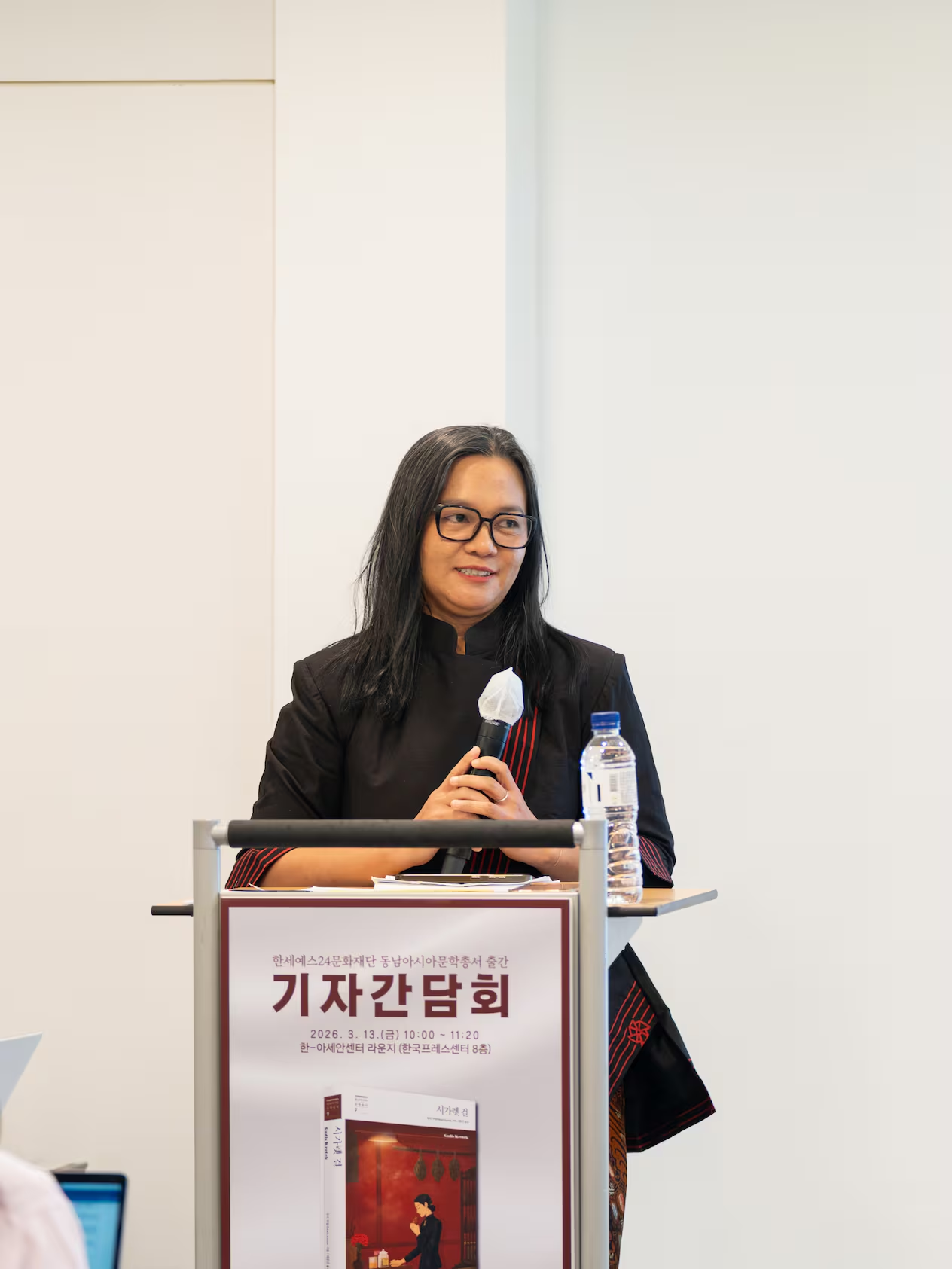
To mark the publication, the foundation held a book event at the Seoul Film Center on March 13, followed by a book concert in Gwangju on March 14, where Kumala met with local readers directly.