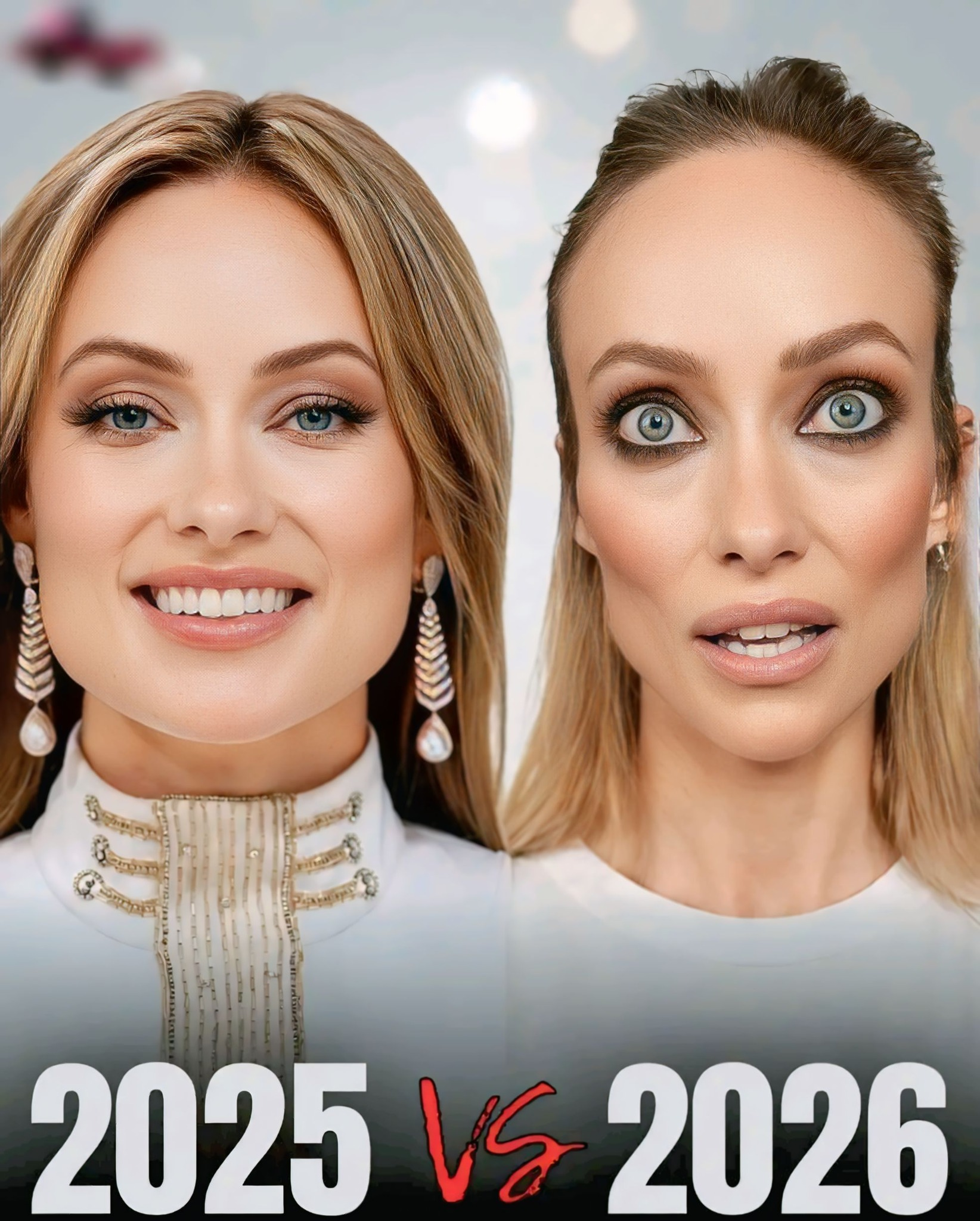
In the modern attention economy, few things capture public intrigue faster than the dramatic visual transformation of a public figure. A prime example is the trending side-by-side comparison graphic of actress Olivia Wilde, split cleanly down the middle and labeled "2025 vs. 2026." While the prompt asks audiences for their simple thoughts on her "new look," the graphic is actually a highly effective piece of digital engineering designed to capitalize on human psychology and platform algorithms.
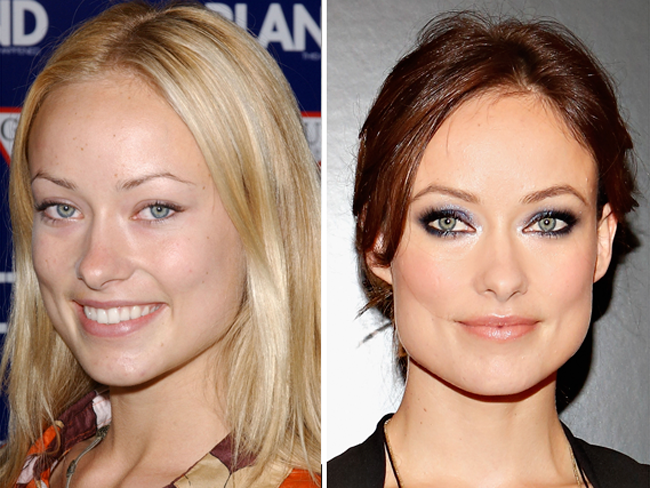
Deconstructing the Visual Contrast
The extreme variation presented between the two images relies entirely on opposing choices in lighting, expression, and makeup artistry rather than an actual physical change over time:
The "2025" Frame: This side utilizes soft, warm, diffused lighting and classic red-carpet glamour. The symmetrical smile, neutral tones, and framing hair evoke a traditional sense of approachability and conventional elegance.
The "2026" Frame: Here, the presentation deliberately subverts those standards. By pulling the hair tightly back, using sharp lighting, and applying heavy, dark, unblended smokey eyeshadow, the look transitions to a high-fashion, avant-garde aesthetic. This intensity is further heightened by a wide-eyed, candid expression instead of a posed smile.