
Read this carefully. I add five to nine and get two. No typo. No trick calculator. The math is completely correct.
Most people stare at it for a second, assume it's a mistake, and move on. The ones who slow down and actually think about it — they get it.
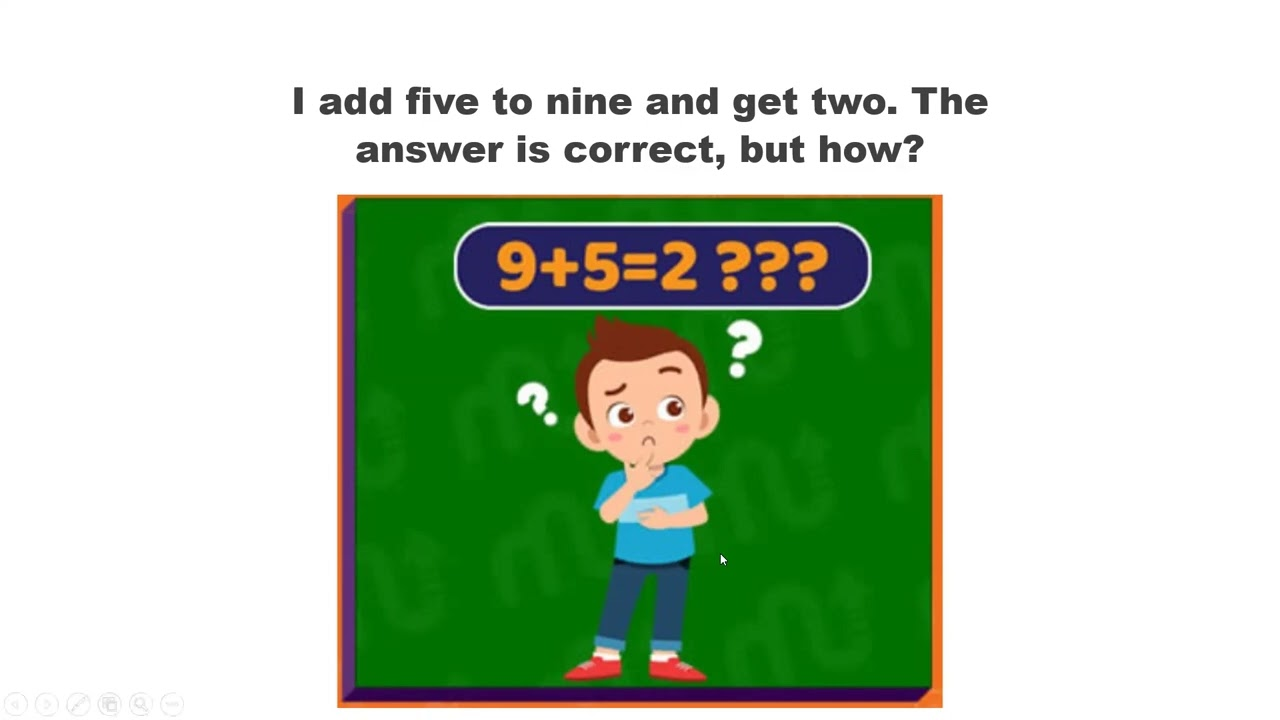
The answer: it's 9 o'clock. Add five hours to 9 a.m. and you land on 2 p.m. That's it. Totally valid. Totally correct.
The reason this stumps people is that the brain reads "5 + 9 = 2" and immediately flags it as wrong. Numbers plus an equals sign triggers one specific mental mode — arithmetic — and arithmetic says that's impossible. What the brain doesn't do is ask: "Wait, what kind of numbers are these?"
Time doesn't follow the same rules as regular math. It wraps around. After 12, you don't get 13 — you get 1. Mathematicians call this modular arithmetic. Clocks run on a base-12 system, which means once you hit 12, the count resets. It's the same reason 11 p.m. plus three hours gives you 2 a.m., not 14 o'clock.
This riddle has been used in logic and math education for years specifically because it breaks the assumption that numbers only mean one thing. Context changes everything.
Five plus nine really does equal two. You've known that your whole life every time you glanced at a clock. You just never thought about it that way.
So — did your brain say "impossible" before it said "wait, what kind of math is this?"