
A joke during a recent taping of The Tonight Show Starring Jimmy Fallon has sparked major backlash from fans of BTS and international audiences. The show’s warm-up comedian, Seth Herzog, reportedly asked the audience, “Anyone from the North?” while introducing BTS, a comment that many viewers perceived as culturally insensitive and xenophobic.
The remark quickly went viral on social media, drawing criticism from fans worldwide who argued that the joke was not only in poor taste but also perpetuated harmful stereotypes about North Korea. The BTS ARMY, known for their swift and passionate responses online, demanded accountability and a public statement from the show itself.
According to reports, Herzog apologized directly to BTS after the taping. Sources indicate that network executives issued him a formal warning, emphasizing the seriousness of culturally insensitive humor, especially when involving international superstars. Despite this, fans continue to call for a broader public apology, arguing that private apologies, while important, are not enough given the global visibility of both BTS and the program.
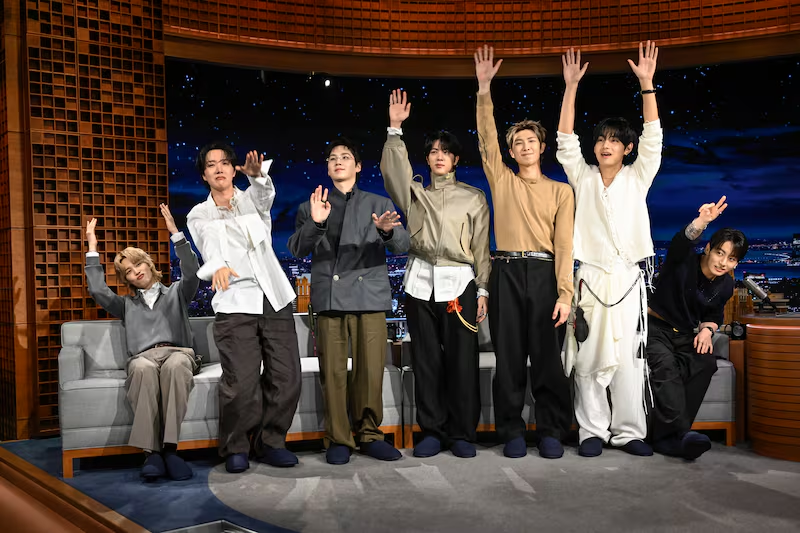
This incident underscores a growing tension in the entertainment industry over jokes targeting nationalities or sensitive geopolitical topics. In recent years, fans and advocacy groups have increasingly held media personalities accountable for remarks deemed offensive, particularly when broadcast to international audiences.
For The Tonight Show, which has featured BTS multiple times and benefited from the group’s massive global fanbase, this controversy highlights the delicate balance required when interacting with culturally diverse audiences. Observers suggest that going forward, comedians and show hosts may need stricter oversight and sensitivity training to prevent similar incidents.

While Herzog’s intentions may have been casual or comedic, the reaction demonstrates the heightened awareness of cultural sensitivity in a globalized entertainment environment. Fans continue to voice their concerns online, hoping that networks recognize the influence they wield and the importance of maintaining respect toward all communities.
The full impact of this controversy remains to be seen, but for now, it has ignited conversations about comedy, accountability, and the responsibilities of media figures when engaging with international celebrities.